Open the funder's actual notice and application instructions before drafting. Record who can apply, what it funds, which costs it excludes, the deadline and time zone, and how reviewers score the proposal. Confirm that the applicant and activity qualify before investing time in the narrative. For U.S. federal opportunities, use the specific funding notice alongside the applicant guidance. Other funders may use a different process. Grants.gov eligibility · Grants.gov applicant guidance
Map each criterion to something you can show
| What reviewers may need | What to prepare |
|---|---|
| Evidence of need | Dated local data or intake records and what they measure. |
| A defined activity | Who runs it, how often, for whom, and over what period. |
| A result you can assess | A target, a method of measurement, and someone responsible for recording it. |
| A usable budget | Units, rates, costs, funding sources, and the reason for each item. |
Write a short paragraph for each actual criterion in the notice. If you mention a partner who will supply space or staff, check what they have agreed to and whether the funder asks for a letter. Keep estimates visible in the working draft until you have the documents to support them.
Build one consistent example
Imagine a community program plans six digital skills sessions for up to 20 participants. The organization will ask participants to complete three practical tasks at the beginning and end, then record how many complete all three at the end. “At least 15 of 20 enrolled participants complete the final task check” is a proposed target. Label it as such. It becomes a result only after you measure it.
Suppose six instructor sessions at $180 cost $1,080, 20 workbooks at $12 cost $240, and room hire is $90 per session for six sessions, or $540. The activity costs $1,860. If another confirmed contribution covers the room and the funder permits the remaining lines, the example request is $1,320. Check any cost-sharing, eligibility, and documentation rules in the notice before using that figure. Make the narrative say six sessions everywhere the budget prices six sessions.
Make the review and submission concrete
Ask someone who did not draft the proposal to trace each activity to its budget line and intended result. Check that dates, head counts, and totals agree in the narrative and forms. Confirm who is authorized to submit and check registration requirements early. Keep the final files and the submission confirmation where your team can find them. Grants.gov explains how to locate the application and work through its submission process. Grants.gov application instructions
Use a drafting tool once the inputs are ready
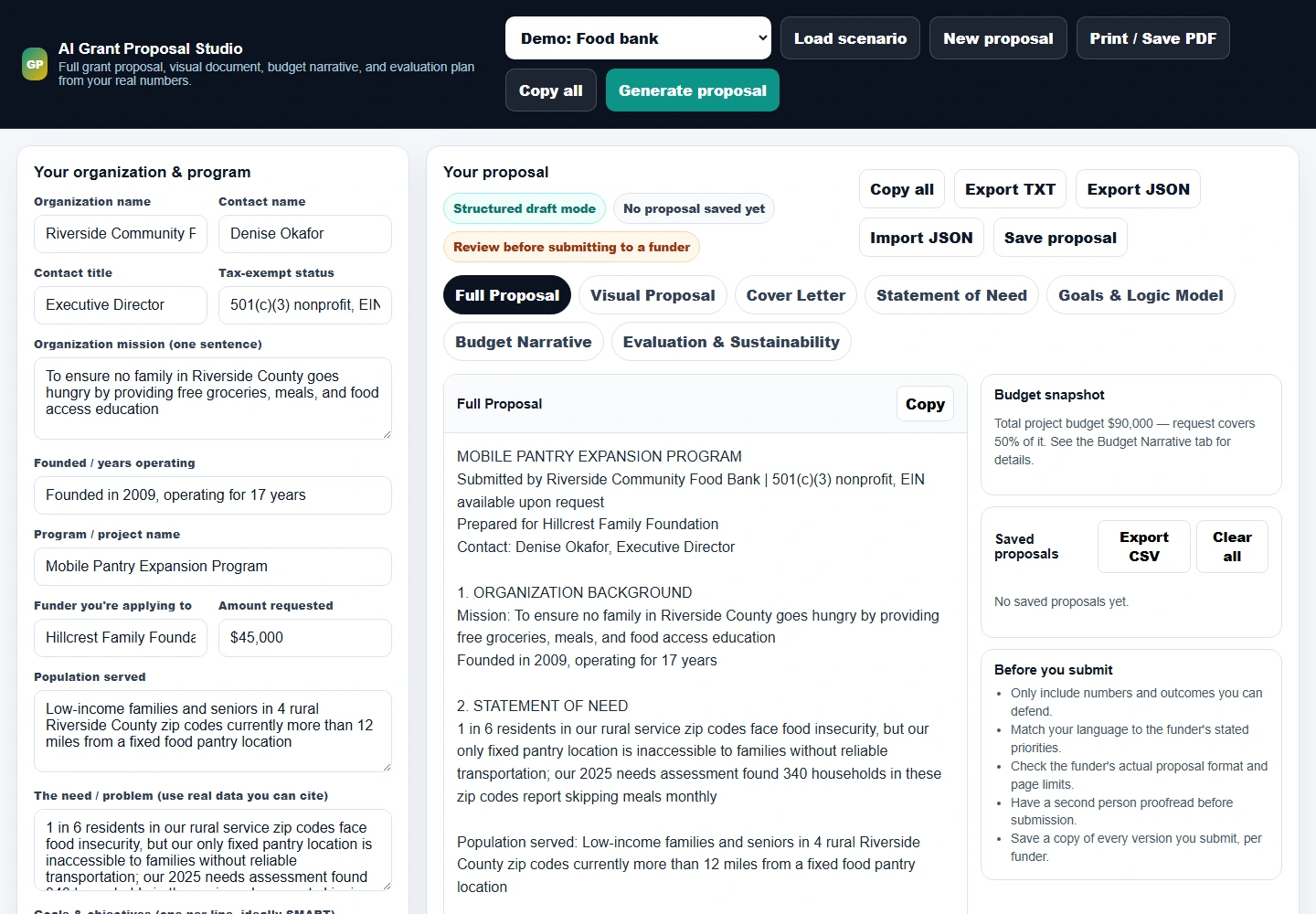
If your team already has a program description, evidence, and cost estimates, a structured draft can help align them. Put each budget line beside its justification before exporting. Review the funder's actual forms and attachments at the end. The Calcoras tool can draft a proposal and cover letter and show a funding-coverage estimate from the values you enter. Calcoras AI Grant Proposal Studio