Write the handbook from the way work actually gets done. An employee should be able to find who to contact, how to make a request, and where to go if the usual person is unavailable. Start with the questions managers answer repeatedly. Build the draft from those answers and the requirements that apply to the people and locations it will cover. For a U.S. employer, federal resources help identify some of the obligations to check. State, local, and workplace-specific requirements also need review. U.S. Department of Labor FirstStep · EEOC Small Business Resource Center
Make a list of policies with an owner for each
Record work locations and employee groups, then list scheduling, pay administration, timekeeping, leave, reporting concerns, safety, and use of company equipment. Write down the current practice and the person responsible for confirming it. When two managers describe different practices, bring the question to the policy owner before turning either answer into a rule. A handbook can make unresolved decisions visible early enough to fix them.
| Topic | Example question for the owner | Evidence to check |
|---|---|---|
| Shift changes | Who confirms the new schedule and how does the worker see it? | Current scheduling process and relevant rules. |
| Time records | How can someone report a missing entry? | Payroll instructions and the escalation contact. |
| Workplace concerns | Which alternate contact can an employee reach? | Reporting routes and review by the appropriate policy owner. |
| Leave | Which policy applies at this location? | Applicable requirements, benefits documents, and current practice. |
Write a policy someone can follow on a busy day
Suppose a small store uses a shared scheduling app. The team agrees that employees request a swap in the app, the duty manager confirms it there, and the original assignment stays in place until confirmation. Write the four elements the worker needs to act: where to request, what information to include, who confirms, and where to ask if the app is unavailable. Use the actual backup contact. Run the draft past a shift worker and see if they can answer those questions without asking the manager who wrote it.
Keep routine scheduling separate from emergencies and legally protected requests. Send leave, accommodations, reporting, and disciplinary policies for qualified review in the applicable jurisdictions before rollout. The example describes a scheduling process. Its details belong to that fictional workplace. Department of Labor employer guidance · EEOC employer resources
Plan how workers will receive changes
Give the approved document a date and name the owner of the next update. Decide where employees will find the current copy and how a change will be communicated to people who are away or work remotely. Keep acknowledgment and revision records as appropriate to your process. If a manager changes a practice, give the policy owner a way to correct the document and retire an outdated copy.
Use a draft to surface what still needs review
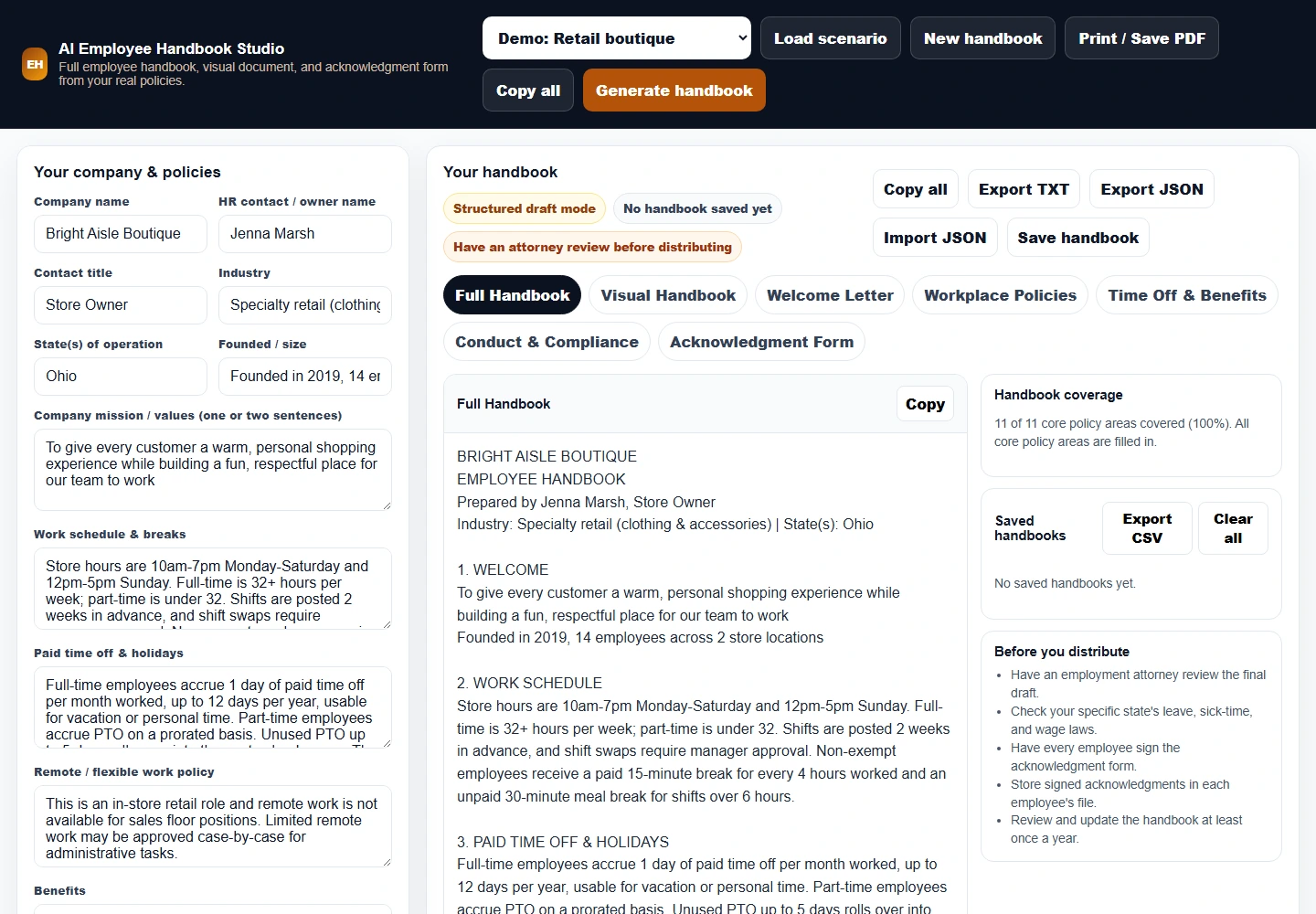
Keep a row for every unresolved policy question and attach it to the draft. If you use Calcoras's tool, review the handbook, acknowledgment draft, and coverage checklist together. Assign any open items before distribution. Calcoras AI Employee Handbook Studio