A first reply should answer what you know and make the next step easy. Start by reading the customer's actual request. Note the service, location, timing, and what information you still need to quote it. If the request fits, give the customer one clear action. If you cannot take the job, a prompt and direct reply lets them move on. Include the cost of handling inquiries when planning how your sales process will work. SBA business management resources
Work through an inquiry before choosing a template
A customer writes, “Can you clean a two-bedroom apartment next Friday? How much?” The team serves the area and needs the postal code, the approximate size, and whether the apartment is furnished. The date may be possible, but the schedule has not been confirmed. A short reply can collect the facts without implying an appointment is reserved.
Thanks for reaching out. Could you send your postal code, approximate apartment size, and whether it will be empty or furnished? I'll check Friday and send an itemized quote once I have those details.
If you already have a published starting price for that exact service, include it with the scope it covers. If a condition changes the price, say which condition. If the customer's reply comes through a text message, keep the response brief and use the channel they are expecting. Review the rules that apply if you plan to send marketing or follow-up messages beyond the service inquiry. FTC commercial email guidance
Keep a short record the next person can use
| Field | What to record for this inquiry |
|---|---|
| Customer request | Two-bedroom cleaning next Friday. |
| Facts still needed | Postal code, size, and furnished status. |
| Next action | Confirm service area and availability after the reply. |
| Owner and due time | The team member who will check and send the quote. |
At the end of the day, check inquiries without an owner or next action. If a reply is slow because every quote needs the owner to check the schedule, giving a draft to a faster writer leaves that scheduling step in place. Choose a simple handoff rule first. For example, the person on intake collects the missing details and the scheduler confirms availability before the estimate is sent.
Measure whether a change helps
For a week, record when the inquiry arrived, when someone answered, and whether the customer supplied enough information for a quote. Then test a short reply format for the next week. Compare similar channels and business hours. If response time drops while quote-ready replies also drop, look for unclear questions. A successful first reply gives the team what it needs to make the next decision and gives the customer a reason to answer.
Keep the draft tied to facts you can verify
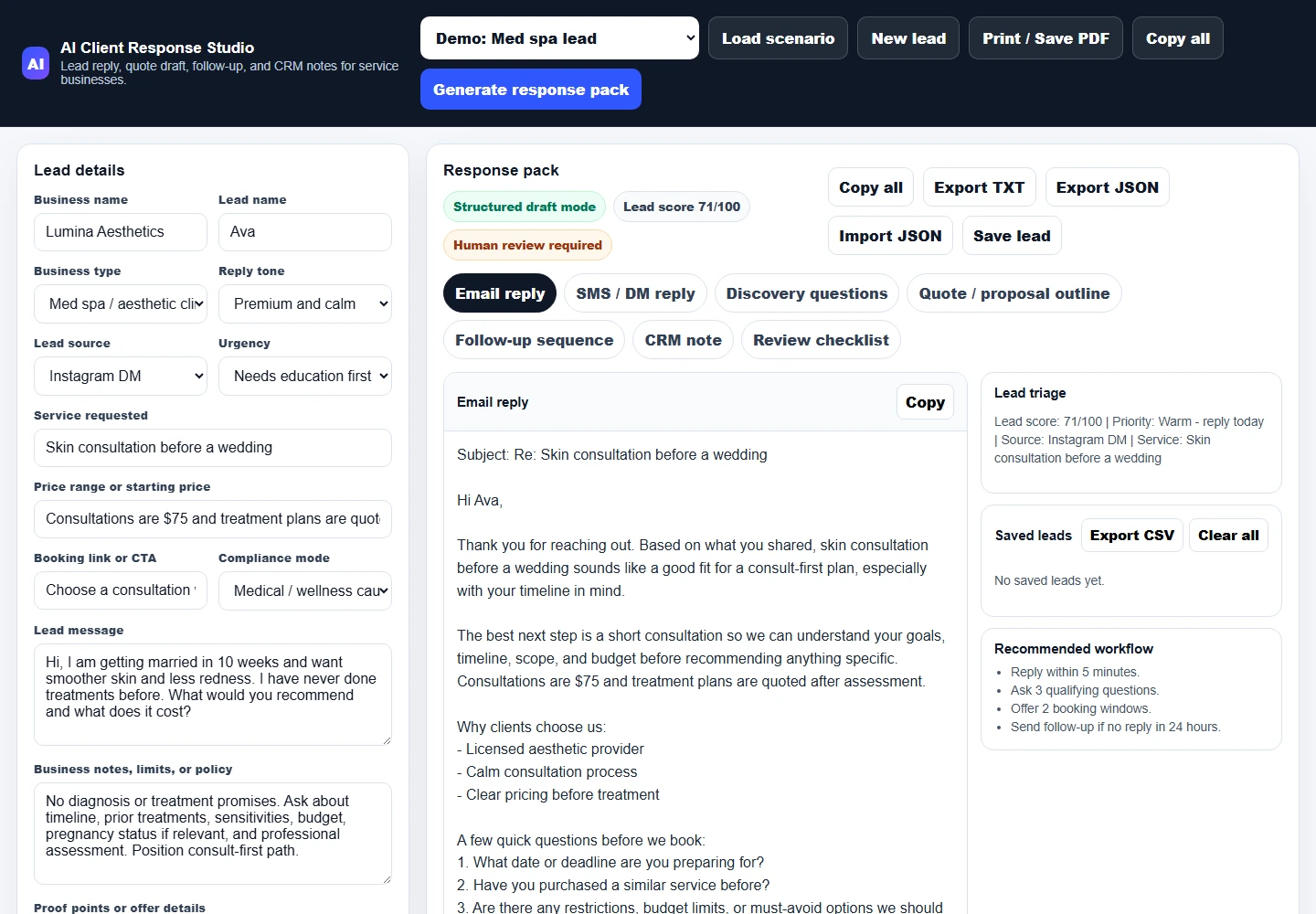
If you use a tool for the first draft, enter the service and confirmed terms. Check the resulting email, shorter message, or quote outline against the actual inquiry before sending it. Calcoras's tool can prepare these drafts and follow-up ideas for review. Calcoras AI Client Response Studio